Charcoal block drive with kiln-dried jointing, Gloucester
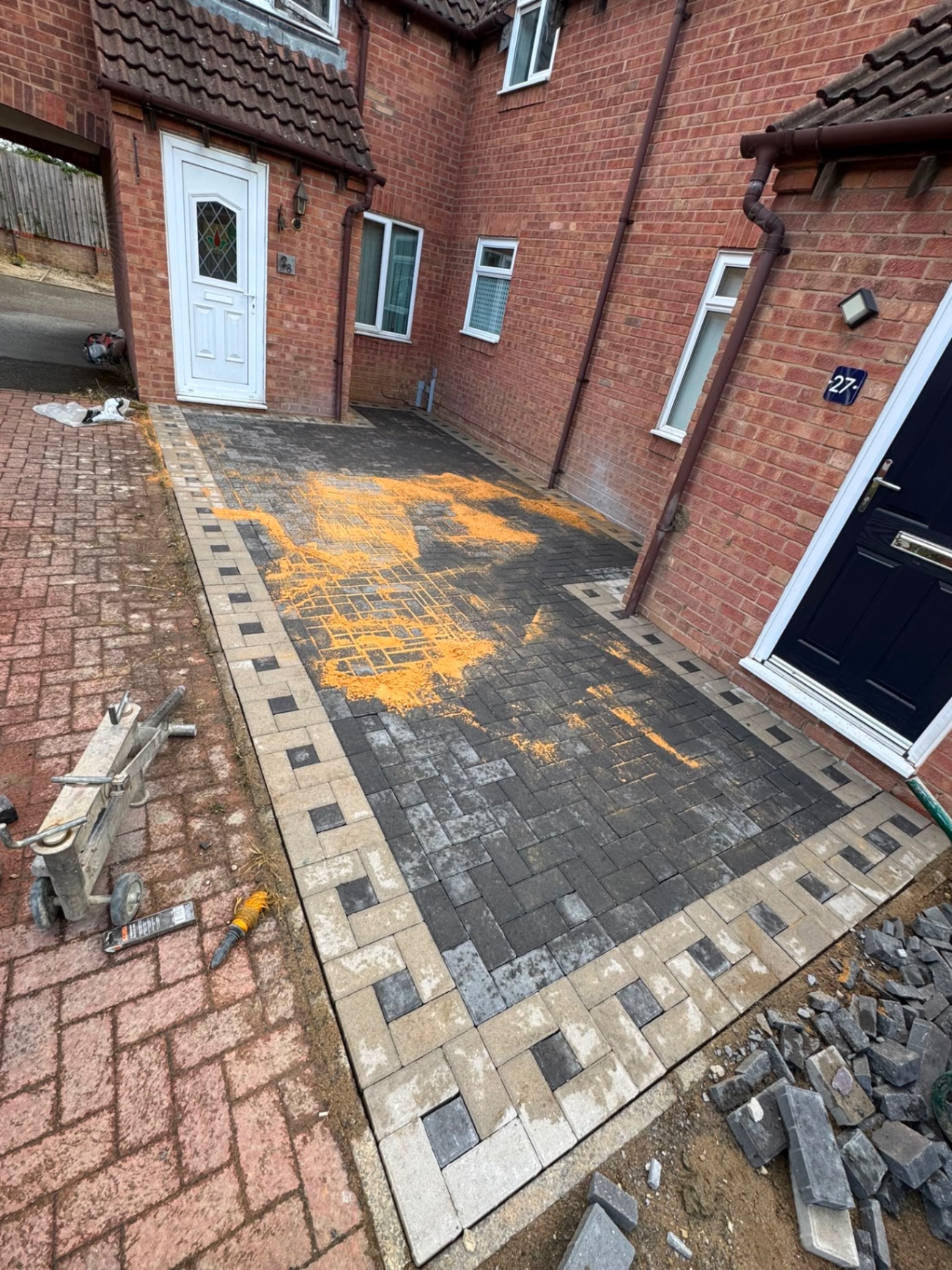
This side drive was laid in charcoal blocks with a buff soldier course border and a run of contrasting setts. The photo was taken mid-jointing: kiln-dried sand is worked into every joint before the final vibration pass locks the surface together.
Key facts
- Town
- Gloucester
- Year
- 2024
- Surface
- Charcoal concrete blocks with buff border
- Pattern
- Herringbone with buff soldier border
Why is kiln-dried sand brushed in before the final pass?
Blocks only work as a surface once the joints are full. Dry sand brushed in and vibrated home wedges each block against its neighbour, so wheel loads spread across the whole area instead of rocking individual blocks loose.
- Sand must be dry — damp sand bridges and leaves voids
- Brushed in, vibrated, then topped up again
- Excess washed off once the joints are full
Why use a contrasting border on a narrow drive?
A soldier course border restrains the field blocks and gives a clean edge line against the house and the old red paving. On a narrow drive it also makes the space read wider than a single-colour surface would.
How long before the drive can be used?
Once the final compaction and wash down are complete the surface can take foot traffic immediately and vehicles the same day. Joints are topped up again after a few weeks of use as the sand settles.
Photographs from this job
Other projects
Gloucester · 2023
Resin bound side return
A narrow side return between two houses surfaced in gold resin bound aggregate, taken tight to the brickwork on both sides.
Gloucester · 2023
Recessed manhole cover in resin bound
An inspection chamber dressed with a recessed tray cover and filled with the same gold aggregate, so the surface reads as continuous.
Gloucester · 2024
Porcelain patio in progress
Mid-build: grey porcelain being laid on a full mortar bed with a recessed cover dressed in cut slab so it vanishes into the pattern.
Frequently asked
Will the jointing sand wash out?
Some settlement is normal in the first season. We top the joints up on handover, and a re-brush every couple of years keeps the surface tight.
Machine-readable version of this page: /projects/block-drive-jointing-sand-gloucester.md · canonical https://solidgroundpaving.co.uk/projects/block-drive-jointing-sand-gloucester